


Synopsis: In Star Trek: Section 31, Emperor Philippa Georgiou rejoins a secret division of Starfleet tasked with protecting the United Federation of Planets, and must face the sins of her past.
The Story
Star Trek: Section 31 sets out to deliver a fast-paced thrill ride, but at a lean 90 minutes, it feels more like a rushed half-baked pilot for a show that never came to be. Originally intended to be a series, the movie squanders its potential to explore the shadowy world of Section 31 in any meaningful way. Instead, we get a few explosions, some forced character moments, and a plot that barely scratches the surface of the rich mythology fans were hoping for.
The plot kicks off with Philippa Georgiou (Michelle Yeoh) being recruited by Alok Sahar, a survivor of the Eugenics Wars, to join a covert team working under the auspices of Section 31. The team is a mix of bizarre characters, including Quasi, a shapeshifter, Fuzz, a tiny alien that pilots an android body, Zeph, a human-mech hybrid with all the depth of a puddle, and, of course, the ever-potentially-interesting Rachel Garrett—a Starfleet officer who, unfortunately, never once appears in her Starfleet uniform. Despite this, there’s a small but significant moment where Georgiou recognizes Garrett’s likely role in Section 31: she’s been assigned oversight of the operation because she’s someone who’s bent the rules in the past. It’s a nice touch, but it’s not enough to elevate Garrett beyond a barely-there character who never gets the development she deserves.
Rachel Garrett is a particularly frustrating wasted opportunity. A hugely popular guest character from one of TNG’s most beloved episodes, “Yesterday’s Enterprise,” Garrett’s role in the film is limited to a few quick scenes. Fans of TNG know that Garrett goes on to become the captain of the Enterprise-C, a position of immense significance, yet here she’s relegated to a background role that doesn’t allow her to shine. The film never once puts her in a Starfleet uniform, and her potential is all but squandered. Given her legacy and fan appeal, the lack of meaningful exploration of her character feels like a huge missed opportunity.
This lack of Federation involvement is especially glaring. Not a single Federation ship appears throughout the story, which feels like a missed opportunity to tie Section 31 into the larger Star Trek universe. Instead, the focus is mostly on the chaos within the team and their vague mission, which feels far removed from anything that would excite longtime fans. The Section 31 mythology itself? Barely touched. The film is more interested in delivering quick action beats than diving into the organization’s dark history.
The biggest disappointment, however, is the missed opportunity to explore Georgiou’s complicated past and her relationship with San. It’s strongly implied that Georgiou was in love with San but chose to betray her and take the throne as Emperor for self-preservation. This emotional conflict could’ve been a powerful focal point, but it’s barely explored—leaving us with a film that feels more like a collection of scattered ideas than a fully realized story.
Acting
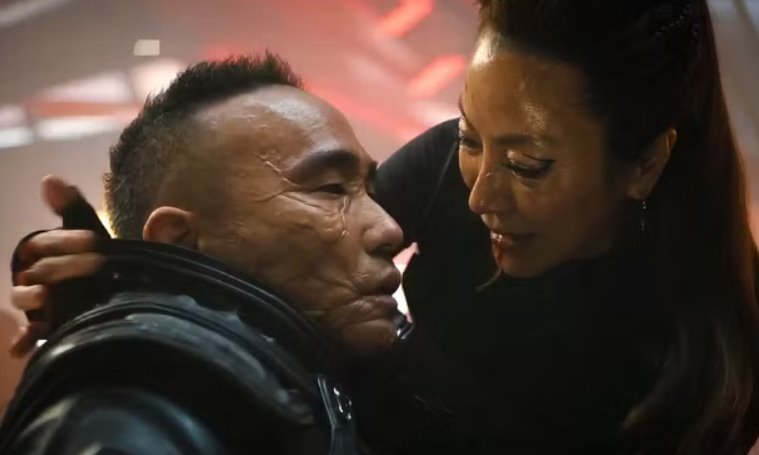
Let’s give credit where it’s due: Michelle Yeoh is, as always, a powerhouse in her role as Philippa Georgiou. She brings a depth to a character that could easily have been one-dimensional. Even when the script fails her, Yeoh infuses Georgiou with the right balance of grit, humor, and vulnerability. It’s clear that she is the best part of this film, and it’s unfortunate that the material she’s working with doesn’t do her justice.
The rest of the cast does their best, but none of the characters get the room to breathe that they deserve. Alok Sahar, with his shadowy past from the Eugenics Wars, could’ve been a fascinating addition to the Star Trek canon, but he’s relegated to being a secondary player who’s mostly there to serve the plot. Fuzz, the tiny alien with a manic energy, is the film’s comic relief but ends up being a bit too much. His frantic pace and over-the-top behavior could have been toned down, but at least he provides some needed moments of levity.
Zeph, the human-mech hybrid, is a walking, talking plot device more than a fully fleshed-out character. While the idea of a hybrid being caught between human and machine is interesting, Zeph’s only real purpose is to make us laugh at how absurd he is. His lack of depth is disappointing, and it’s hard to care about his fate in a film that doesn’t take the time to develop him beyond a few quirky moments.
Rachel Garrett is the film’s most frustrating character. As a popular TNG guest character, it’s a huge missed opportunity to not have her play a larger, more impactful role. She’s there, but never once does she appear in a Starfleet uniform—something fans were hoping for, especially given her significance in the TNG era. Instead, Garrett is relegated to a role that doesn’t do her character justice, adding little to the movie beyond a bit of Starfleet “flavor.” At least the small moment where Georgiou acknowledges her rule-bending past adds a little dimension to Garrett’s character, but again, it’s far too little, far too late.
CGI & Stunts
When it comes to the visuals, Section 31 knows what it’s doing. The CGI is sleek, polished, and overall pretty spectacular—though, with the budget this film likely had, it would have been criminal if it weren’t. The space battles, while thrilling, do border on gratuitous, but at least they’re visually exciting. The Godsend Doomsday device? An impressive piece of CGI eye-candy, though the forced joke about its name (“Godsend or Gods End?”) makes you groan as much as it impresses.
Fuzz, the tiny alien in an android body, is particularly well-designed and is arguably the film’s visual standout. While his character is a bit manic, there’s no denying the technical skill in bringing him to life. As far as CGI goes, Section 31 certainly doesn’t skimp on quality, and while the constant explosions may feel like overkill at times, they do deliver a good visual punch.
Incidental Music
The music in Section 31? Well, it’s there. It does the job, filling the background while we watch characters deliver melodramatic speeches or run from explosions. But don’t expect anything iconic. The soundtrack doesn’t add anything remarkable to the experience, and it’s easy to forget it’s even playing. When it comes to Star Trek music, fans have come to expect something that enhances the emotional beats and adds layers to the scenes—Section 31 doesn’t manage that. The score is functional, but it’s as forgettable as the film’s secondary characters.
Overall
Star Trek: Section 31 is a film that tries to be everything to everyone but ends up being a lot of noise with little substance. The action is fun, the CGI is top-notch, and Michelle Yeoh delivers a solid performance, but the story feels rushed, and the character development is sorely lacking. With only 90 minutes to work with, the film leaves a lot of ideas on the table, including the potential for deep exploration of Section 31, Georgiou’s past, and the unique team dynamics.
Fans of the franchise may find some enjoyment in the action and visuals, but those looking for a meaningful addition to Star Trek’s rich storytelling legacy will likely be disappointed. It’s a fun, popcorn-movie experience, but ultimately, Section 31 feels more like a missed opportunity than a satisfying chapter in the Star Trek universe.

- Story5.3
- Acting8.5
- CGI & Stunts9.0
- Incidental Music6.5
