


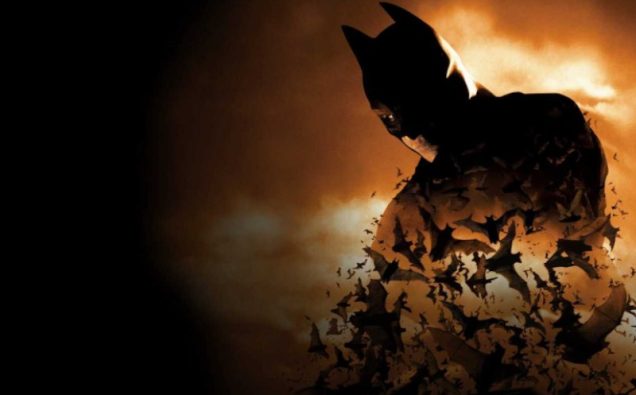
It’s hard to believe, but Batman Begins—Christopher Nolan’s moody, muscular reboot of the Caped Crusader—turns 20 this year. Two decades have passed since Christian Bale first rasped “I’m Batman” with the emotional weight of a man who’s clearly been through one too many silent retreats. And yet, the film remains not just a fan-favorite, but a pivot point for an entire genre that was, in 2005, struggling to pick a tone between camp and catastrophe.
Before Batman Begins, superhero movies were either glittery spectacles (Spider-Man 2) or misfires wrapped in leather (Catwoman—meow, indeed). What Nolan offered instead was something previously unthinkable in a comic book film: restraint. Here was a Batman origin story that treated childhood trauma with earnest psychology, refused to wink at the audience, and, perhaps most importantly, took Bruce Wayne seriously as a man, not just a brooding billionaire with a tragic backstory and a Bat-themed branding problem.
That seriousness is perhaps Batman Begins’ greatest contribution—and, in some ways, its heaviest burden. The film ushered in an age where superhero films could be prestige cinema. There are no neon gangsters, no Schwarzenegger Mr. Freezes punning their way through a nuclear winter. Instead, there’s Ra’s al Ghul quoting Eastern philosophy, Liam Neeson glowering like he’s teaching an AP Ethics course, and Gotham, a city that feels less like a comic book playground and more like a crumbling American metropolis on the verge of spiritual collapse. (Insert your own “still relevant” metaphor here.)
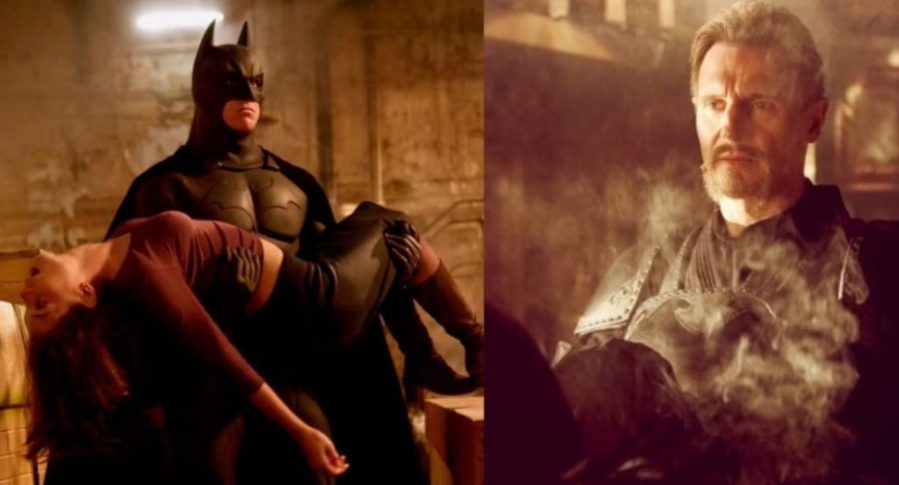
That relevance is part of why the film continues to resonate. Gotham in Batman Begins isn’t the gothic cartoonishness of Tim Burton’s vision, nor the clean steel jungle of Snyder’s later work. Nolan’s city is steeped in fear, in corruption, in decay. It’s a city where crime isn’t just a plot point—it’s the setting. Bruce Wayne’s arc, from vengeance-seeking rich kid to morally tortured vigilante, mirrors the film’s insistence that justice isn’t about theatrics, but choice. And not the flashy kind—more the agonizing, slow-burn, “will I have to lie to my loved ones forever?” kind.
This seriousness—often imitated, rarely equaled—reverberated across Hollywood. Without Batman Begins, there is no Dark Knight, of course, but also no Iron Man, no Logan, no Joker (a film that seems to have studied Begins’ sense of despair and said, “Hold my nihilism”). Marvel Studios learned quickly from Nolan’s playbook: make it grounded, give your hero pathos, and for goodness’ sake, hire real actors. (Iron Man came just three years later, and Robert Downey Jr. owes a not-so-small debt to the idea that a comic book character could carry the dramatic weight of a Shakespearean hero—albeit one who quips while blowing things up.)
But while the Nolan trilogy’s later chapters may have overshadowed Begins in box office receipts and Oscar bait (The Dark Knight looms large in any superhero retrospective), it’s Batman Begins that planted the seed. It redefined the “origin story,” turning it from obligatory exposition into rich mythmaking. The film showed us not just how Bruce became Batman, but why he had to—emotionally, ethically, existentially. It made the mask mean something.
Rewatching Batman Begins today, what’s striking is how little it tries to entertain in the traditional sense. There are no crowd-pleasing needle drops, no sidekicks cracking jokes every ten seconds. Even the action scenes, while competent, are filmed in a way that suggests Nolan was more interested in panic and claustrophobia than clean choreography. And yet, this restraint is what gives the film its staying power. It dares to be about something: fear, trauma, identity. Not just punching.
That’s not to say it’s joyless. There is pleasure to be had in watching Michael Caine’s Alfred sneak in dry barbs (“You can borrow the Rolls, just bring it back with a full tank”), and in watching Morgan Freeman’s Lucius Fox take one long look at a billion-dollar arsenal and ask, essentially, “Is this for spelunking?” The film may be dark, but it isn’t dour. It simply respects the intelligence of its audience—a radical act in any genre.
Twenty years later, Batman Begins still feels like a touchstone, not just for comic book cinema, but for the question of how we mythologize our heroes. In an age where franchises are built on spectacle and synergy, Nolan’s film remains a reminder that sometimes, the most powerful stories begin not with a bang, but a whisper: a boy, a cave, a bat.
And, of course, a butler who makes the best damn sarcastic quips in the business.
TL;DR: Batman Begins walked so the MCU could quip. Twenty years on, it’s still teaching us that behind every mask worth wearing is a choice, a wound, and a very good tailor.
