


The Star Trek franchise is entering a period of transition as Paramount’s merger with Skydance begins to reshape the studio’s strategy. In the past week, a mix of official announcements, creator interviews, and industry speculation has painted a picture of both exciting opportunities and uncertain futures for Star Trek on screen.
Skydance Sets Out Its Holistic Plans
Earlier this month, Skydance CEO David Ellison outlined his vision for the new Paramount, describing it as a tech-first entertainment company. The studio will be reorganised into three arms—studios, direct-to-consumer streaming, and television networks—with a focus on efficiency and technological innovation.
Plans include AI-assisted localisation, virtual production techniques, and a unified ad-tech platform aimed at cutting costs by as much as $2 billion. Paramount’s film slate is set to expand from its current eight releases per year to as many as 20 annually, with Star Trek among the top franchises slated for renewed investment.
Interestingly, Paramount will also retain and repurpose its cable assets, such as Nickelodeon and MTV, tying them more closely into its streaming ecosystem. This suggests a more holistic brand strategy, designed to maximise audience reach across platforms.
Lower Decks Makes Hugo History
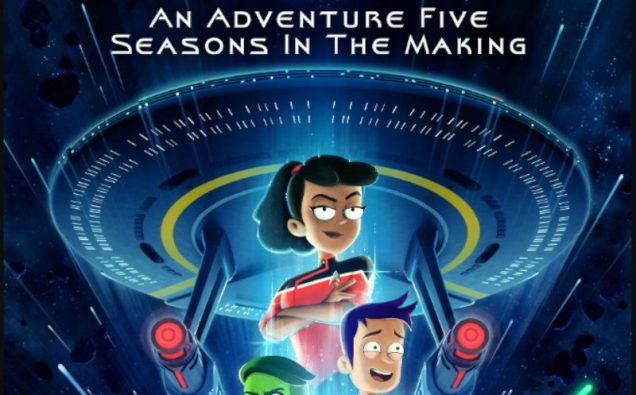
In a stunning achievement, Star Trek: Lower Decks has won two Hugo Awards, marking the first time a Trek series has earned Hugo recognition since The Next Generation more than three decades ago.
The wins underline the show’s creative success under Mike McMahan, whose irreverent yet heartfelt take on Trek lore has resonated with fans and critics alike. What makes this more striking is that Alex Kurtzman was far less directly involved with Lower Decks than with series such as Discovery, Section 31, and Starfleet Academy—all of which have so far failed to secure major industry awards.
For long-time fans, the Hugos are validation that Trek still thrives when it embraces sharp writing, character-driven humour, and a willingness to poke fun at its own mythology.
Animated Future? Aaron Waltke Talks New Projects
In a recent interview with TrekMovie.com, Star Trek: Prodigy co-producer Aaron Waltke spoke about the possibilities for future animated Trek. While he stopped short of confirming a new project, Waltke indicated he remains enthusiastic about telling more stories in animation, hinting that Paramount and CBS Studios have “kicked the tires” on new concepts.
Waltke stressed that animation allows Trek to push boundaries in a way live-action cannot, both visually and narratively. Fans of Prodigy—which has found new life on Netflix—will be watching closely to see if his comments foreshadow an eventual greenlight.
President Archer?
One of the more surprising stories to emerge is the revelation that Scott Bakula and writer Mike Sussman developed a pitch for Star Trek: United, a series that would follow Jonathan Archer after his Starfleet career as President of the Federation.
Described as a blend of The West Wing, The Diplomat, and even Andor, the concept focuses on diplomacy, intrigue, and the political struggles of maintaining a united Federation in turbulent times.
Although the pitch was sent to Alex Kurtzman’s Secret Hideout, it was not picked up. However, with Skydance’s new leadership keen to expand the brand, fans are wondering if this grounded, politically-charged Trek series might get a second look.
Terry Matalas and the Legacy Pitch
Meanwhile, Star Trek: Picard showrunner Terry Matalas confirmed during Star Trek Las Vegas that he has written a 30-page story treatment for a possible Legacy series. The project, envisioned as a sequel to Picard, would follow Seven of Nine and the next generation of Starfleet officers.
Matalas revealed his treatment includes significant Klingon arcs and a roadmap for weaving in classic characters alongside new ones. While Paramount has not yet committed, the fact that such a detailed treatment exists shows there’s still strong creative energy within the franchise’s current stable of producers.
Kurtzman’s Future in Question?
While Ellison has spoken highly of Star Trek as a key property, rumours persist about changes behind the scenes. The fan site Tachyon Pulse has suggested that Skydance may only offer Alex Kurtzman and his company Secret Hideout a short-term deal, with reduced control over the franchise.
Tachyon Pulse did not cite its sources, so this should be taken with caution. However, given Kurtzman’s current contract expires in 2026, speculation about his long-term role in shepherding Trek is not unfounded.
A Franchise at a Crossroads
Taken together, these developments underscore that Star Trek is at a crossroads. On one hand, Paramount’s new owners are clearly committed to producing more films and shows, with ambitious plans for technological integration. On the other, the creative direction remains unsettled, with competing visions ranging from animated adventures to political dramas, and questions about who will ultimately hold the reins.
Yet amid this uncertainty, the Hugos for Lower Decks serve as a powerful reminder: when Star Trek balances fresh ideas with respect for its roots, it still has the power to boldly go where few franchises can follow.
